
As we prepare to celebrate the 250th birthday of the world’s longest running democracy, I’ll examine some of the reasons that a half-century old refugee (me) harbors resentment and anger for historical events that are far beyond control. Moreover, why anyone should care, and what has and has not been done to address centuries old prejudices, grievances and the inequality that the present has inherited from the past.
Happy Birthday America!!!
These are highly politically charged times that see little effort to mend the gaps between both sides of the liberal and conservative aisle. MAGA has engulfed the Republican party which is reflected upon the Judicial, Legislative and Executive branches in an extremist brand of leadership that has widened the gulf between sides and threatens to fracture the nation’s political balance permanently. Add to this the increasing disparities between the upper class and the rest and there are some serious issues that Americans will have to face in the coming years and decades if the country looks to return to a functional two-party democracy. As yet another war in the Middle East rages and the cost of living seems to even continue to spiral up and out of practical bounds for many, discontent spreads wide across the land.
These are the challenges that each generation must face, however. And for better or for worse attitudes concerning the government and its leadership are arguments that must be taken up no matter how critical they may seem. In the past this has not been unusual or new to our 250 year old republic. Even many of the colonialists of the 1700’s were reluctant to oppose the crown of England and journey forth without its support. Nothing will polarize political sides more than war and whether it is the 17th, 18th, 19th, 20th or 21st century makes no difference. People are the same across all generations and societies, they want prosperity, security, equality and opportunity regardless of the flag under which they live. Granted that not all countries are created equal and many have not lived up to these standards at any given time of history. In fact, history is rife with countries whose leaders ruled not by those lofty principles but instead by means of despotism, greed, cruelty and malice. Hence the constant beat of war drums that continue up to this very day. The United States of America promised to be different, though, and in order to carry through with its promise it instituted doctrine and its political philosophies that empowered its citizens not only to abide by the laws of the land but to control the executors who enforced them and even replace them when necessary. For 250 years this “experiment” can be considered a success. Although this is a landmark to be proud of, there can be no rest. Human nature has demonstrated the perilous nature of power and wealth concentrated in the hands of the few and the guardians of liberty must forever remain vigilant against abuse.
We are at the precipice of a new generation that will shape all those that follow it. Those who were born into the 21st century are anointed stewards of the future. A future that will be defined by Artificial Intelligence, economic globalism, accelerating climate change, the space race and warfare that can eradicate everything that we know in less than an hour. These are issues that in the beginning of the last century weren’t considerations. In addition, humans suffer from the same shortcomings of pride and hubris that have plagued them for their entire existence. In short, humanity has evolved little but its access to technology and instruments that can affect one another in profound and global measure has only increased. Our societies are in less of a position to be afforded mistakes; we must hold those in power accountable.
America the Dutiful
The definition of patriotism is not characterized by blind allegiance to one’s country. Some or even many will disagree with this statement but examples of blind faith exhibited by countrymen only to be betrayed, or worse, are common. America’s early decades are defined by quite a bit of insecurity, financial insolvency at times and wave after wave of territorial conflicts. Patriotism was important to the young nation and acts of treason were punished more sternly, often by lethal means. In the last century the definitions of political resistance and treason have become more difficult to both define and react to. As the events of World War II became more distant and panics such as the Red Scare were buried under the guilt of wrongdoing and embarrassment of paranoia, the popular opinion shifted in the opposite direction as wars in Southeast Asia and eventually the Middle East tested citizen’s loyalty and led them to question the motives of the Federal Government. In the past, challenging the government’s direction had always been an issue that citizens could take up at their own risk with potentially more punitive and serious consequences if interpreted as a threat. Today, the changing cultural landscape and advances in communication have shifted favor to the citizens. Speech and acts of resistance have never been easier to exercise or express to large numbers of the population.
The caveat to speaking out against one’s government or leadership is that this will always provoke backlash. Not only from the side of the accused but there are many who will unfailingly back the side of authority, believing that the government always has the best of intentions for its citizens and even going so far as retorting that rebuke of public authority is akin to treason. The beauty of a democratic system is that, if devised well, it allows for and even encourages dissent. All philosophers and political scientists have championed dissent as this is one of the means by which institutions and hypotheses are tested. There is seldom an “absolute truth” and even an erroneous statement may contain a kernel of truth. This is how political science functions and it is imperative that healthy democracies continue to embrace internal analysis and criticism from those who participate in its practices.
Anyone who accuses their elected officials or government of abuse of power or failure to represent the people’s will (or actual treason) does so with the burden of having to demonstrate this to their audience. Failing to do so will neutralize their argument and effectively render their viewpoint unsustainable. For all of the outlets available in the public sphere there are no shortages of those making these claims, often on wildly unfounded and paranoid screeds or diatribes aimed at specific individuals such as the President or other high ranking members of the Federal government. As mentioned, this is permitted to happen in a functioning democracy no matter how off-base the claims may grow. In this public forum the process of vetting the unreasonable from the reasonable is left to the audience who in the best of circumstances are able to detect and expose fraud or un-biased rumor from fact. Dissent by its nature should not be viewed as betrayal. As a result of the highly polarized views between the political sides in this country an increasing retort is heard from conservatives: criticism of the government is unpatriotic. To a larger extent this can be applied to portrayals of not only the present but the past. This type of historical interpretation is now under intense scrutiny as the Trump Administration began to effectively change the history represented throughout the entire Federal Government and remove negative literature, images and portrayals of events, replacing them with flawless interpretations of history. This involved sometimes erasing the history of specific events entirely. In opposition to criticism of American history and its often unsavory methods of population control (slavery, dispossession, assimilation), this new approach seeks to erase the past in an effort to supplant a vision of perfection and harmony instead. The only problem with this approach is that it is purely fictional. Erasure and replacement of the past will result not in a cleansing of society but will inevitably lead to more suffering. Telling the truth of those who suffered injustices in our country’s past is not akin to “hatred of one’s own country”. It will be far more damaging to erase these legacies than allow the future to learn from its own past. Disturbingly this is an aspect the current Administration does not understand and seems determined to suppress any efforts of pursuing.
Jingo Unchained
Jingoism: Blind patriotism, a my country right or wrong attitude towards other nations and ideologies. Prevalent in certain sections of US and UK society
Source: Urban Dictionary
One of the most disturbing behaviors that has resulted in the Maga movement is the extreme allegiance that its followers adhere to. Not unlike many other political and social movements in history, the “Magashpere” requires unquestioning loyalty to its leadership and motives. I stress ‘unquestioning’ because many of the administration’s actions result in indirect harm to its followers; blind loyalty leads them to ignore the fact that they will eventually fall victim to the same collateral damage that these decisions will cause. Recent examples are plenty such as the illegal tariffs levied against foreign imports, the sudden war against Iran and ongoing shutdown of federal funding to divisions such as the TSA and EPA.
Then there is the termination of USAid. The shuttering of USAid has already led to dire situations for impoverished communities on almost every continent. Not only has it severed vital resources that supplied communities struggling with food and medical dependency, but the diminishing goodwill that has vanished as a result will last for generations among those who suffer needlessly. Within the first few days of DOGE reviews and the defunding spree that the new administration went on, USAid was one of the first under the knife. The department was accused of willful abuse of funding and wasteful indiscretion when the fact was that its budget was less than 1% of the entire Federal budget and it benefitted a global population of at risk and at need communities. However, driven by the analysis of certain new outlets Maga supporters rabidly cheered its demise and considered it another liberal cash cow slain. Now as the Ebola virus and other humanity/health crises afflict populations that USAid one served, all that remains are resentment and suffering.
Meanwhile, in the United States, federal cabinet officials jetset across the world to parties and athletic events with reckless abandon. The White House’s East Wing is bulldozed for a new glitzy ballroom. Data centers pop up at a record pace and cryptocurrency surges in the markets as the Trump family nets a record earning for any Presidential term in history. It’s business as usual for what resembles more of a crime family than the country’s first family. All this while Americans are paying more at the pump for gas, dealing with surging inflation for their basic needs and the national deficit continues to grow. But don’t say a bad word about the “greatest President of all time”, to do so is not only unpatriotic but potentially treasonous. Even our poorest, least educated Maga followers think that somehow they will have a chance at some sort of benefit from this windfall of wealth that is profiting corporate America and special interests (read: 0.001%). It is much more indicative to acknowledge that not only is the rife corruption and disorganization of this Administration appalling to liberals, but it is beginning to rend the ties of the Republican party and once staunch supporters of Trump. In recent weeks criticism from Carleson Tucker, Ben Shapiro and Joe Rogan have made the rounds. The war in Iran has stalled and affected both the global economy and US job growth and commerce. The high courts have declared the tariffs illegal and struck them down, resulting in millions of necessary repayments to private businesses across the country. The second tour of making America great again isn’t going as planned, and yet so many citizens continue to be fooled by this ‘greatest of dealmakers’ in the White House. And this is far from new for a young and often naive nation.
Cleanse, Fold and Manipulate
Up until this point I have aimed all dissatisfaction with the direction of the country at the current Executive officeholder. In order to be honest with history and keep with the theme of this post I must now direct attention to the past and the equally capricious history that our nation has established leading up to this very moment in the 21st century. Despite the side you may take, in a political sense, politicians are essentially the same regardless of which side of the aisle they stand on. They’re out there to get votes so they can keep their jobs, nothing less, nothing more. When the economy lags, they promise jobs. When national security is threatened, they bolster the military. When student test scores fall behind, they cut spending on education. The office of the POTUS has essentially been the same for 250 years with exceptions made for those handed unique situations for challenging times. So far Mount Rushmore has four faces hewn into its rock face: George Washington, Thomas Jefferson, Abraham Lincoln, Theodore Roosevelt…Donald Trump? Unlikely, although at this point he will be remembered for having an influence in history, just not the way he sees himself.
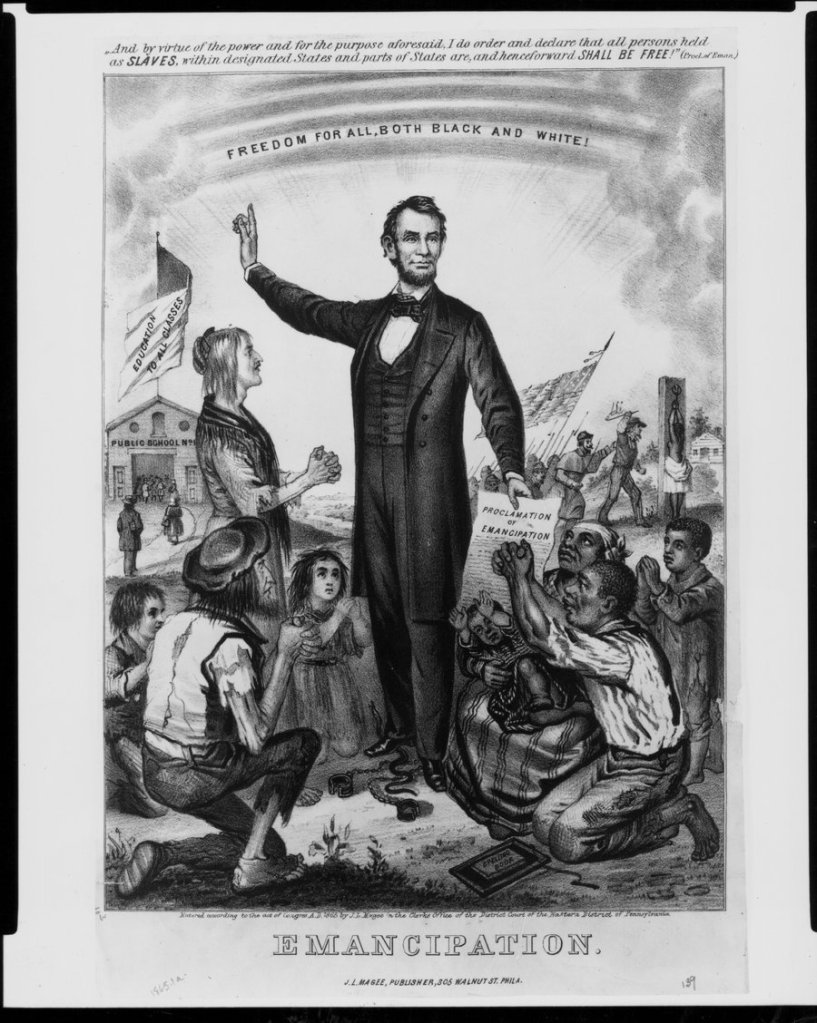
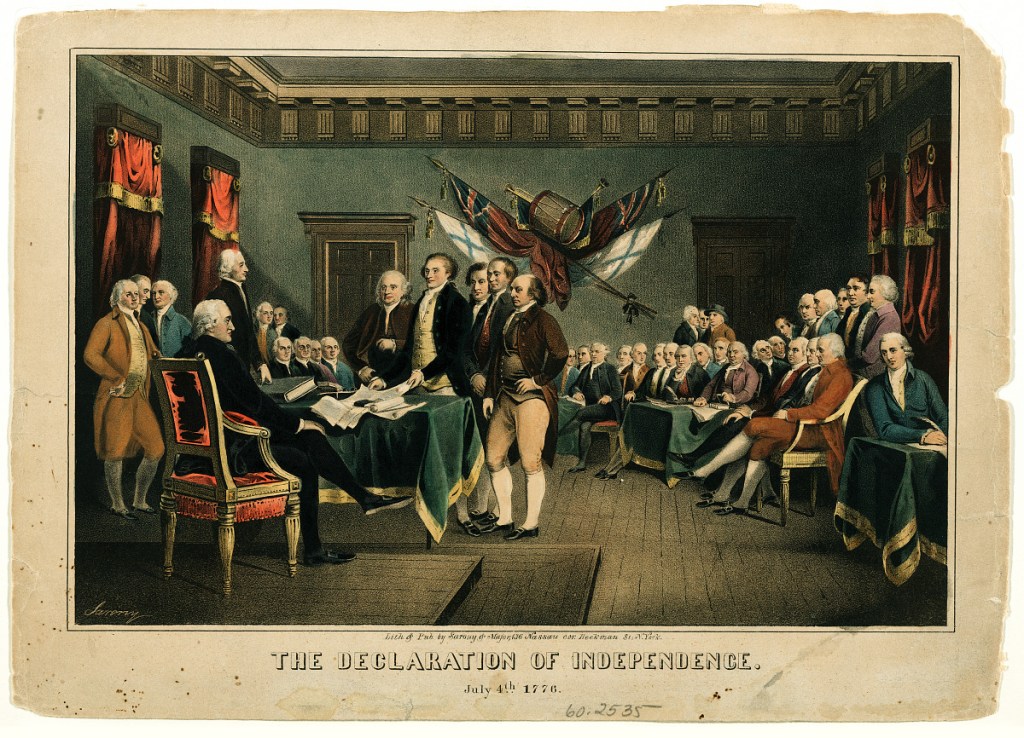
All the way back to the founding fathers who were by and large slaveholders, America established a legacy of inequality while striving to become something else. The image of the country portrayed by the Constitution and Declaration of Independence paint a noble picture of aspiring colonists escaping the tyranny of Great Britain’s rule to establish a utopian democracy on a wild new continent. The violent, bloody and controversial settlement and overtake of the occupied North American wilderness offers a much different and sobering perspective in what is typical of human nature: survival of the fittest (and most well armed). To be sure this has always been the way; erasing the culture of that before it in order to establish the new dominant hierarchy of society. In this aspect America can’t be blamed as it is following the path of humanity and its tendency to consume, overcome and assimilate cultures. However, the ambition of the documents that formed the foundation of a new nation remain unique examples of what the human spirit can accomplish when the greatest of ideals is placed first and foremost. As time has shown, ideals are one thing, maintaining them is another.
Among many challenges that faced colonists was the demand for resources for the rapidly expanding industrialized country. The indigenous populations were pre-industrial and instead lived off the land to a larger extent. American expansion required not only land but immense resources of timber, a vast array of materials and labor to say the least. As some of us know, the means to extract and refine the raw material from the land fell to the colonists, who in turn, put subordinates to the task. Along with black slaves stolen from Africa and other regions of the world (it should be noted that slavery was a very common global practice in the 1700’s), many European and Asian immigrants were treated as half-races and put to the yoke of back breaking labor to build the towns and cities for the rapidly expanding country. Many of the inequalities established as a result of these first generations of Americans were so persistent that their effects were carried well into the 20th century at which point a number of large and small social movements persuaded a guilty nation and body politic to catch up to its ambitions and enact law and legislation enforcing equal treatment of not only certain races but for women as well. This is about the time that some will state, “There are many countries around the world that don’t treat people as well as the U.S. and you are welcome to go live there and then, if you ever come back here, try complaining!” This is the type of argument that gets nowhere since the defense of our society/country involves an example of one that is underdeveloped and culturally distinct from ours. It also deflects the assertion that our society has failed its own goals by insisting that one must compare it with a society that does not fit the same criteria with which ours is judged. The point in criticizing America in its shortcomings of civil and ethical treatment is to identify that it has lost sight of its own ideals and must remain true to these lofty ideals despite any obstacles in their way. Going and “living in another country to see what it is like” may reinforce the belief that America is exceptional in some ways, and this can be seen as a privilege. But should having a decent quality of life and being treated as equal constitute a privilege? If this can be said then it is an indictment of humanity at large for its shortcomings. I choose to look at American society and see what can be made better to stay true to the ideals that were written into the founding documents, even if they seem wholly unattainable or have never been truly attained. After all, America is an experiment in politics and culture and even when it fails, it will have established a milestone closer to what we like to define as ‘humanity’ than any before it.
Returning to the discussion concerning American leadership, it has kept the country together for 250 years which is arguably one of modern history’s more remarkable achievements. However, the United States has endured similar trials and tribulations as any country would over the course of 2 ½ centuries and this has not come without some disappointments that many would prefer to ignore. When Barack Obama became the 44th President of the United States it marked more than 200 years since the beginning of the country that a person with skin that was not considered “white” was allowed to hold this office. During the time of his office he presided over a Legislative Branch that remained dominantly white and male. Although women and other minorities have managed to steadily but slowly increase their participation and election to the all-white golf club that is the American political system, much remains to be desired of how power is balanced in America. With recent swings to election laws and state redistricting, the trend of adding different demographics as representatives of their states seems likely to slow if not reverse. As has happened in the past, America is experiencing a particularly paranoid stage of its journey and it has been easy to whip up xenophobia with a new “most wanted” poster child being those of Latin descent and origin. Again, the ugly problem of how we deal with those from afar (or even not so afar) returns and we predictably respond with fear and the callback to nationalism. As progressive as we would like to think we are, it takes little to send our democracy cowering between the legs of an authoritarian Uncle Sam. Although it is nice to consider how far we have come it should not obscure the observation of how far we still need to go.