

Brown Lives Matter?
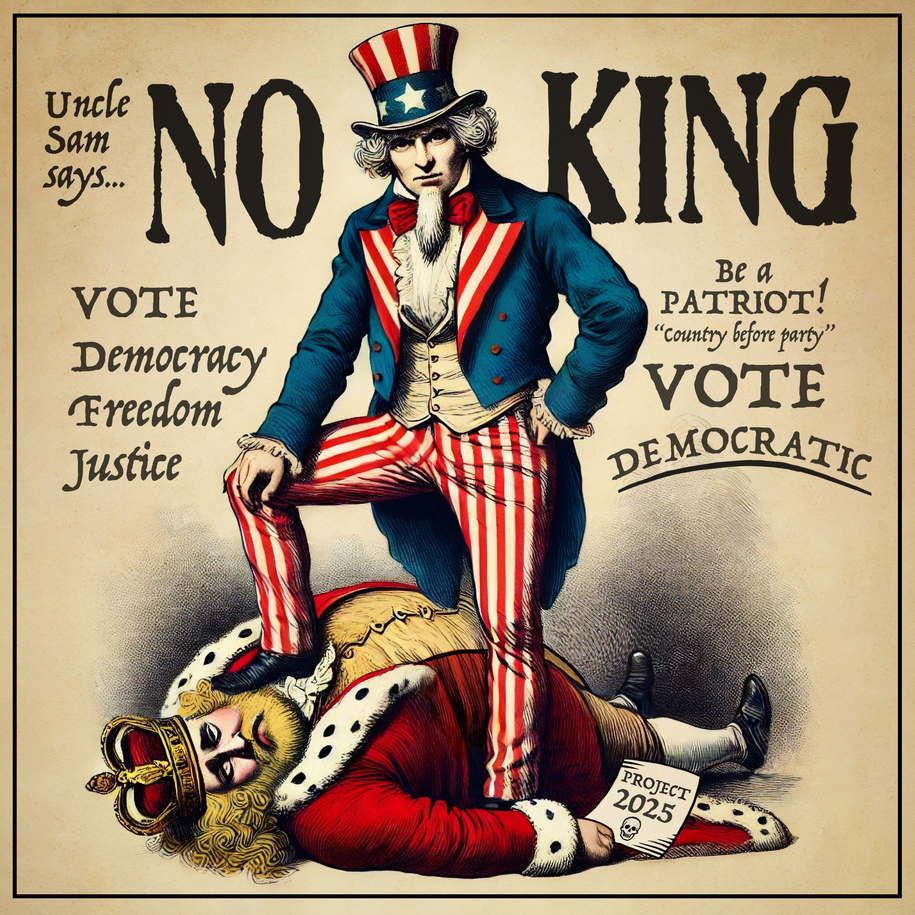
If there are moments that encapsulate the zeitgeist and momentum of the United States of America in the 21st century then let the week of June 10, 2025 be one that stands out. For weeks the newsfeed was dominated by the position of the Trump Whitehouse to (unlawfully) deport immigrants to other countries resulting in both political, legal and public backlash. Finally, in the early days of June this tinderbox hit its flashpoint and violence erupted in Los Angeles. Trump promptly dispatched the National Guard to quell rioting demonstrators, much to the dismay of California’s Governor and the L.A. Mayor. However most of the country saw this as a calculated attempt to usurp the moment from protests. The protests of 2019 resulted in a wide ranging effect and impact on the American political and social consciousness. Some may even argue that it cost Trump the subsequent election although his cult will insist that it was “stolen” to their dying days. But the point here is visibility, in his second term as President, Trump does not want to look vulnerable in any way and he has attacked this term as if it were (and should be) his last with a blitz of actions that have almost made politics exciting. Anyone who is still addicted to the news cycle can’t peel their ears and eyes from their faithful go-tos which diligently spout the day’s outrage to culled audiences of carefully trained followers. This time round is a take-no-prisoners declaration by a Republican party that is led by an individual that is determined to not only leave his mark on history, but change the landscape of the country permanently if he can. And the prospects seem grim for those who would oppose him.
As a result of events in Los Angeles, protests have been scheduled in cities across the country, with the alarm already sounded by preemptive actions in response. Demonstrators can expect a heavy presence of law enforcement and zero tolerance for lawlessness or what is perceived as lawlessness. Reports from L.A. already allege arrests based on flimsy accusations and excessive force used by both police and the National Guard. Nevertheless, the country and the world are watching as once again the greatest reality show on Earth enters its 249th season. You can be sure of one thing, the summer of 2025 is not going to be a Black Lives Matter moment. The protests may summarize a collective discontent with the Trump administration and its policies but the damage was done in the 2024 elections when the Orange Dictator was overwhelmingly swept back to power in a route that also ousted any Democratic voice from the table effectively for the next two years. If a Civil War is indeed in the offing, then the cult of MAGA are those waving their own Confederate flag except for this time they have the support of the north and the south with them.
It is not the 1800’s and blacks are not those under the chain and yoke of whites, browns are in the crosshairs of administration policy however. Immigration is a touchy subject in today’s America. Although it remains the world’s most powerful and influential economy it was built on the backs of immigrants and slaves over the past 300 years. The country has often been vague in attributing its wealth to the true pioneers. Inventors and entrepreneurs have always been lauded and heralded as leaders in industry and economy, but those who worked in the mills and factories are the forgotten ones. Minorities, women and children sacrificed blood, sweat and sometimes their lives to advance American industry. However, names like Edison, Rockefeller and Ford are what is printed in history books. I am not comparing the suffering of mostly Latinos to those of the blacks who suffered slavery for centuries. Latinos are by and large here of their own volition and willingly employed by companies who will gladly pay them a fraction of what most citizens earn. Over the last several decades, the labor of undocumented immigrants has undoubtedly enriched the profits of the labor sector immeasurably. The policies of the Trump administration are nothing less than a punishing blow to both the economic balance and legacy of labor in this country. They are also against the principles of rights afforded immigrants by the laws of the Constitution. In his effort to oust “gangsters and vile criminals” from our society the administration has applied a blanket policy of deportation to innocent laborers, certified green card immigrants and college students. In doing so he is crippling the future of labor, education and possibly innovation across the country. All for the sake of xenophobia and an insidious intent to purify the country from outsiders. Whether this succeeds or not remains to be seen, Trump disregards the principles upon which the country is founded which is the greatest threat. What a single man with a vision can do is the stuff of history, in this case it’s just not the right side of history.
The Battles That Define Us
Too often in life half of the eulogy is written before we have earned it, that is, we are remembered for our flaws instead of strengths and triumphs. Effectively, we become a living tragedy until we die at which point praise is lavished upon the dead. This can certainly be said for the two icons of music who passed almost simultaneously in the same week.
Brian Wilson
Wilson was hailed as a visionary and the guiding force behind one of the most legendary rock bands of all history. If you have never heard of the Beach Boys you have either been living under a stone or have willfully avoided society as a whole. They are one of the most iconic bands from one of the most iconic periods of music. They not only changed music in America, but they influenced what is considered the most influential bands of all rock history: the Beatles. I’m not here to write the obituary on Wilson, many others have done a much better job than I ever will. What I wanted to briefly focus on was his personal battle with mental illness and how this affected the public’s image of him and cast a shadow over most of his career.
Wilson heard sounds that didn’t exist throughout most of his life, eventually being diagnosed with a type of schizophrenia that is exceedingly rare. Despite these circumstances he excelled at music and used it to his advantage when the rest of the world either turned him away or took advantage of him. As a white man in an industry that favored groups predominantly filled with white men, Brian was somehow an outlier and singled out for his mental condition. It made getting along with his siblings and bandmates challenging and also took its toll on his relationships throughout his life. Like many of that time and career path, he struggled with drug addiction. However through the duration of the Beach Boys run, which included more than 20 albums over a decade, his brilliance was the anchor for what was portrayed as a troubled life. Unlike many of his bandmates, Wilson was an outcast as the result of his mental illness. The biggest tragedy was that it was more often blamed on drugs since mental illness is not understood or approached well by society even in this day and age. Of course, in the end he is hailed as the brilliant person he always was. Because in death, it doesn’t make headlines to show the negative side of most people.
Sly “Stone” Stewart
Sly was one of those prodigies that don’t seem to come along often but were sprinkled throughout the 60’s and 70’ as if a music fairy had visited hospitals and orphanages frequently in the time period. He began playing instruments at an early age and never looked back. Buoyed by a musical family he followed a path that seemed pre-determined to lead him to music, and that is exactly what he did. As with Wilson, I don’t need to write an obituary for Stone as many have done so much better for him. Also, as with Wilson, Sly’s life followed a tragic path marred by abuse that haunted his musical career and public perception to the end.
Like the Beach Boys, Sly and the Family Stone is attributed to influencing innumerable musicians and listeners in the following decades. The music melded several genres in a way never heard before and subsequently birthed and continued to revive the hip-hop generation in the form of samples used on more tracks than anyone else. Like Wilson, Sly struggled with demons but they were more self inflicted than anything else. By the end of the 70’s his problems broke up the band and instead of resting on his well-earned laurels he was destitute living in a van. He died sick and broke in as tragic a way a rock star story can end. During the past decades Sly was portrayed as the pariah for the 70’s rockstar; he was vilified for his shortcomings and exposed as a junkie for all the world to see. In death, even the melancholy arc of his career is difficult to ignore. In music, he is immortalized in his heyday as fans should choose to remember him.
Brian Wilson and Sly Stone died days from one another but there is a glaring truth how their deaths were treated by news outlets. Sly passed first, drawing tributes and accolades from fans and media outlets. His praises were sung and stories told; he benefited the send off that a 70’s superstar deserved. However, the roses hadn’t wilted from the bouquet when news broke that Wilson had also passed. Stop the presses. Rock n’ Roll royalty takes precedence. I noticed the morning after Wilson’s death was announced, as I sifted through newsfeeds, that it was as if any mention of Sly Stone had been scraped from the record in order to make way for Wilson tributes. To be honest, two giants, one global grandstand, only room for one?
It reminded me of the civil clashes of the 60’s and 70’s when black culture and music fought for chart space and respect. The Beach Boys’ music is beloved and captured a niche of Americana that cannot be denied but at the same time Sly’s music was a revelation for a generation that were witnessing change at a time that it was needed more than ever. Sly and the Family Stone’s music became anthems of empowerment, togetherness and individuality for not only black youths but for a generation of white kids discovering sounds they had never been exposed to. The Beach Boys struck a completely different chord of popular but effervescent charm, eliciting images of innocent summers spent on beaches, cruising in cars and mingling with peers. The two genres could not have been more different but together they defined entire generations of culture not only for themselves but for decades to come. It struck me that media outlets would supplant one giant for another. It was like being transported back to their musical generation: white vs black. In the end we know that both had their shortcomings and low moments but they always fought to make their music heard to the world, and neither would have cared if they had to share a stage to do so.
 VitriolBlog