

Vietnam: An Epic Tragedy
Author Sir Max Hastings
The American Civil War lasted roughly 5 years and killed more than a million citizens, the majority of them enlisted men. It is the bloodiest and most casualty laden conflict that the country has ever seen. Contrast this with the Vietnam war that was fought in Southeast Asia exceeding the time period of a decade from the 1960’s to the mid 1970’s when the last American embassies were evacuated. During this time, more than 50,000 American enlisted soldiers were killed in action (KIA). However, Vietnamese losses on both sides numbered in the tens of thousands of soldiers and also included estimates of millions of civilians. Most casualty figures cannot be formally backed by statistics as few or none were officially taken with any consistency. As occurs in all civil wars, it tore families, communities and political institutions apart. In an unexpected twist it also tore apart the nation which funded and backed the war effort of South Vietnam on the opposite side of the ocean. For a country that seldom had ever had a true identity, confined to colonial European rulership for decades, the war offered Vietnam to slip into a communist identity. To many who had lived under the oppression of colonialism for decades, it was an identity independent of another foreign power’s control. In the case of the American goliath, standing tall after World War II, the war tore down the illusions of invincibility and righteousness that had permeated the world order. It also left a scar on the political and emotional landscape of the country that lasted for decades, only to be repeated again several decades later.
As an author of military history Max Hastings has few, if any, peers. He approaches the subject of the Vietnam War with the objectivity of the most professional of journalists and chronicles the multitude layers of perspectives on the years-long conflict from the terrified peasants, to the determined soldiers, to the corrupt generals and politicians pulling the strings behind the scenes.
Colonial Misgivings
For decades the region of Southeast Asia that eventually became known as Laos, Cambodia, Thailand and Vietnam was simply referred to as “French Indochina”. Following the end of World War II the remains of the Axis states and some of Asia were carved up leaving the allies to enjoy the “spoils of war”. For France this happened to be a return to the resource rich region of south Asia. As French occupation wore on, divisions clearly appeared in societies that were traditionally aligned with the class-defined structure of the country pre-war and resented the imposed western organization that French occupation brought. Seeking a way to their own independence, the loyal nationalists in the north turned towards the communist backed governments that offered them a way out, regardless of political affiliation. The Vietnamese just wanted to gain their own independence after an eternity of colonial manipulation. Eventually the French would learn this the hard way with blood spilled over conflicts with the communist forces of the north, forcing their voluntary withdrawal by the middle of the 1950’s.
The Secret War
The United States had been watching the unfolding scenario in Southeast Asia with great interest. Since the Cold War with Russia was in full swing and both they and China had sided with the North’s revolutionary efforts against France, the U.S. feared that one thing might lead to another which was all of the region falling under communist influence. This could not stand but all out war was not an option following the unpopular and brutal lessons of Korea. The solution was to tacitly invest U.S. arms and support in the form of thousands of “advisers” in Vietnam for the next 5 years. This took place largely under the nose of the American public and incoming administration. The theory that America could undermine the communist’s efforts to empower the North by secretly managing the South was as bad as it sounded. It underestimated the resistance government’s resolve against further colonization, the resources and tolerance of the North’s allies, and most importantly the error of managing what was essentially a civil war by using a puppet government in the South that did not even have the support of its own citizens.
Hastings notes that, contrasted with the brutal focus of Northern philosopher and political leader Ho Chi Minh, the Southern appointed leader Ngo Dinh Diem was a much less charismatic and effective leader. At this point it was evident that the U.S. had less interest in what was best for Vietnam than it did in providing the illusion that they were standing between an onslaught of Communist ideology. Despite what seemed obvious to the Vietnamese themselves, America was about to go all in against an adversary that didn’t flinch and would refuse to leave the table.
Rolling Blunder
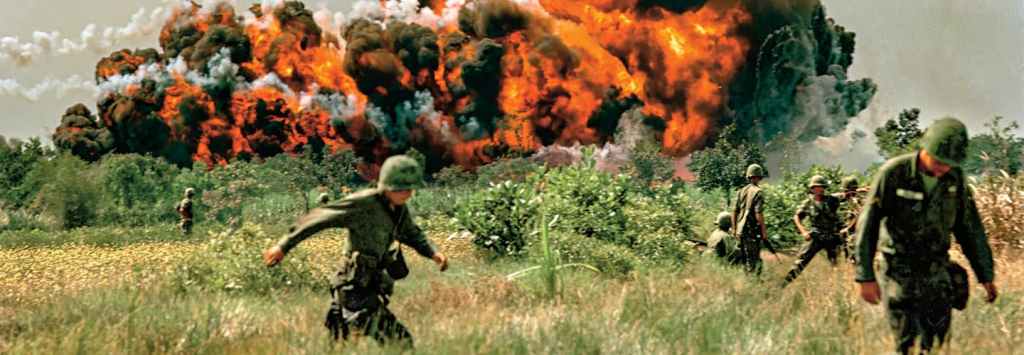
By the time John F. Kennedy was elected the 35th President of the United States of America the war was still largely unacknowledged by the American press and public. This was not the case when JFK was assassinated three years later in Dallas. The war that JFK and later Lyndon B. Johnson inherited had grown in intensity and breadth. Logistical and strategic blunders already permeated decision making on the South Vietnamese/U.S. side as Hastings demonstrated in his descriptions of the Tonkin Gulf incident and the decision to engage in air bombardment as opposed to direct American troop deployment. The truth was that Southern trained forces were far less disciplined and motivated than their adversaries, the North or NVA. In addition, the politburo of the NVA used both the visibility of America’s careless military strategy and obvious political manipulation of the South to weaken the principles upon which the entire U.S. war effort was based. A steady supply of troops and supplies via the Ho Chi Minh trail guaranteed that NVA forces were consistently prepared for the hardships they faced against a South supplied by the world’s economic superpower. In order to stunt the flow of supplies from the North, the United States’ approach was to engage in a campaign of bombing areas of the Ho Chi Minh trail with impunity. Use of heavy ordinance and defoliants reach an all time high for any military operation in history. The results were less than desired and instead exacted often immense collateral damage upon civilians. This fact sowed the seeds of disapproval among the world press and popular opinion against the U.S. efforts in the war instead of the intended effect of buoying its efforts as a stalwart against communism.
Politically, America was stymied with how to commit to the growing conflict. Kennedy had grappled with how to look strong against communism without risking the same level of bloodshed as Korea and now this became LBJ’s predicament. Moreover, asking Congress for increasing funding for the South Vietnamese government was leading to decisions that would place American troops directly in the line of fire and announce a full blown commitment to the war. This was all happening in light of the fact that North Vietnam did not seem dissuaded nor discouraged from their objectives even in the face of daunting losses and atrocious conditions faced by their own troops and people. One factor that neither the South nor Americans could fathom was the unerring commitment to their cause that was inspired by North Vietnam’s leadership and philosophy. Theirs was a true determination while the South’s seemed a mere notion without sincerity. The South’s parade of puppet regimes and corrupt elected leaders could not impress upon their society the benefits that western capitalism held versus the oppressive grip that communism threatened. It was all civilians’ wish for their country, North and South, to bring an end to the fighting and death and a return to daily life.
House of Cards
The daily air bombings were more or less a facade for the losing side of the war. On the ground, the U.S. and South Vietnamese steadily lost ground and face value against their determined foes from the north. At the same time, the media was gradually turning against the war efforts as images of burning villages, martyred religious figures and orphaned children regularly filled television screens in America. High profile battles such as the Tet Offensive and the battle of Hue City added to the humiliation and as the war continued, American commanders noted a change in the attitudes of the soldiers for the worse. Drug use had proliferated rapidly along with corruption and graft as the amount of troops caught with alcohol and narcotics had become endemic. American supplies more often than not found their way into the hands of Vietnamese merchants and incidents of “fragging” or assassinations of officers rose.
By the time that President Nixon was elected the war was basically a matter of damage control. The press and the American public began to turn against the draft and the war effort. Soldiers sent to Vietnam rarely re-enlisted, most just wanted to get out alive. A war that Washington had never wholeheartedly believed in and supported with limited financial and human capital was collapsing. The South Vietnamese, who had expected to receive the full support of America’s military might, were about to find out what the war really meant to America and the American people. As Nixon’s political career spiralled into infamy, his cabinet saw fit to treat Vietnam as another measure of failed foreign policy and cut and run. Secretary of State Henry Kissinger personally saw to affairs as the U.S. orchestrated a clumsy and strategic withdrawal, allowing the puppet leadership to collapse unceremoniously in the face of their own failed leadership and the abandonment of the U.S. military’s advisers.
Hastings notes that although the U.S. military leadership believed in the approach and strategy of the war they seemed at times to be the only ones. As the war effort was tossed from one Presidential administration to another not only did enthusiasm for the cause wane, but so did commitment to the original reason they were there: to turn back the ideology of the North and communism. Administrations even took to extending the war and bombings into neighboring countries of Laos, Thailand and Cambodia in a desperate attempt to stem the flow of supplies to the communists. However, in all their bluster and posturing the Americans never invested in the true element necessary to actually defeat communism: the hearts and minds of the South Vietnamese. And this was one thing that the North owned and proved to be the downfall of both the South and the U.S. military. All the while Ho Chi Minh and his compatriots knew that they needed only to wait out the Americans.
Although support for the war had ended years ago, when the last embassy closed in 1975 nothing stopped the flood of the NVA army into Saigon or the remaining cities of the south. The resulting takeover and retribution against revolutionaries of the South’s regime were brutal and tragic. America was gone in both force and intention from Southeast Asia leaving a string of ruined countries and bewildered people in its wake. The Vietnamese who had turned to the U.S. felt abandoned and lost while America faced a process of reflection and recovery from another war that seemed unnecessary and left only unfulfilled goals. Moreover, the war had left deep wounds in both the Americans who served and returned and those who watched from afar and learned to distrust and even resent their own government and military. It was a war from which the country never healed, repeating the same mistakes 20 years later in the Middle East.
Legacy
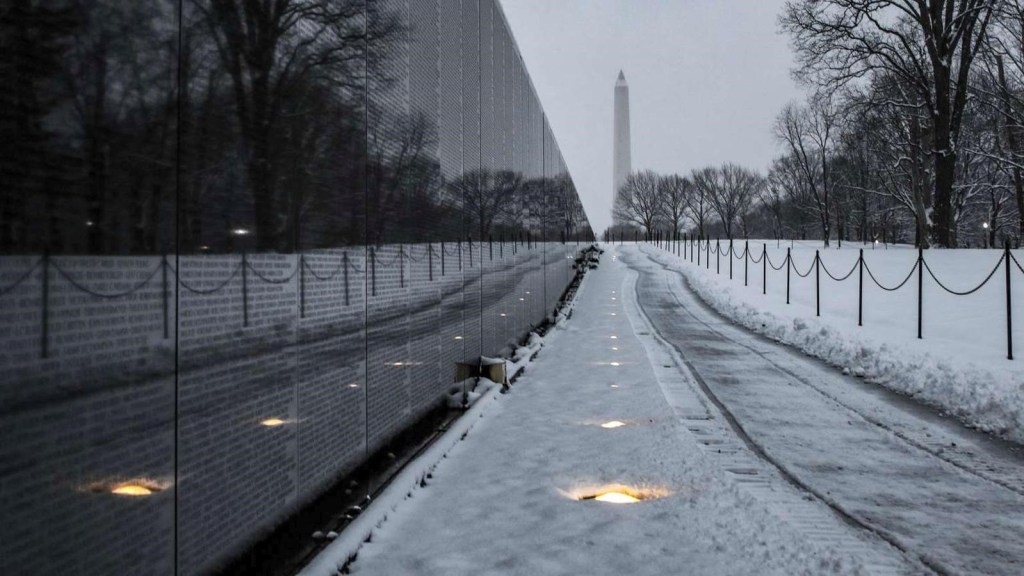
It seems a cliche to observe that for some, even many, the Vietnam war never ended. This is what can be said for every war. The years and decades following the Vietnam war have been filled with a litany of documentaries, literature, films and every other form of media imaginable. A granite monument placed in the nation’s Capitol stands as both tribute and reminder of the terrible and tumultuous period that both countries went through. Entire generations have been raised in the shadows of the war on both sides of the ocean. Some are products of its influences while others are direct descendents of the people of Vietnam. Orphans and refugees fled the country in droves by boat, plane and on foot. The indigenous people of the mountains and highlands, the Montagnards, determined guides of American forces, were relocated to the United States settling in the Great Lakes region to escape the oppressive vengeance of the victorious North.
Perhaps the darkest legacy is that of retribution with the Vietnamese themselves and the willful amnesia that the United States approached the war with. In the wake of the catastrophe the oppressors were as merciless in their punishment of the South Vietnamese as they were towards foreign prisoners of war. Many Vietnamese families were not reunited for decades following the end of the war if at all. An untold count of soldiers from both the North and the South remain missing and unaccounted for while the urgent plight to return America’s missing POW’s lasted for decades after the war. The innumerable unmarked graves that pockmark the landscape throughout Southeast Asia bear testament to the horrendous tolls of war while unearthed mines and other hazards remain a deadly reminder of the merciless nature of combat. The United States was left with generations of men and women who carried the wounds of the war both physically and emotionally. For many these did not heal. Worst of all, the care necessary to assist those who sacrificed was often denied by not only the government and institutions who willingly sent individuals to war, but by American society as a whole. Following the war the country wanted little more than to wash its hands of the experience and forget it. This was perhaps as grievous a sin as denying the commitment the country had made to the small Asian nation it besieged in its pledge to freedom decades ago: a denial gone full circle.
Today, Vietnam is an independent and prospecting nation with opportunistic entrepreneurs existing within a communist structure. Many of the world’s goods flow in and out of this region which acts as a manufacturing hub for clothing and other products outsourced by many global corporations. After nearly half a century some of the land has overgrown the scars of conflict while others bear ominous clues to the bloodshed that once stained the land. It should be noted that not only was Vietnam affected tragically by the war but its neighboring countries, Laos, Cambodia, and Thailand also suffered long lasting effects that left only bitterness and resentment for both the Vietnamese and America that may never heal. War lies over every society it touches like a curse that cannot be lifted. For Vietnam it is glimpsed in the everyday and reflected in reminders such as the name Ho Chi Minh City which was once called Saigon. For America, it is another burnish on an empire. Another failed attempt at peacemaking abroad that fell short, and another generation betrayed by a failure of the best of intentions.
 VitriolBlog